
Treatment
Dental fillings and root canal treatment (RCT)
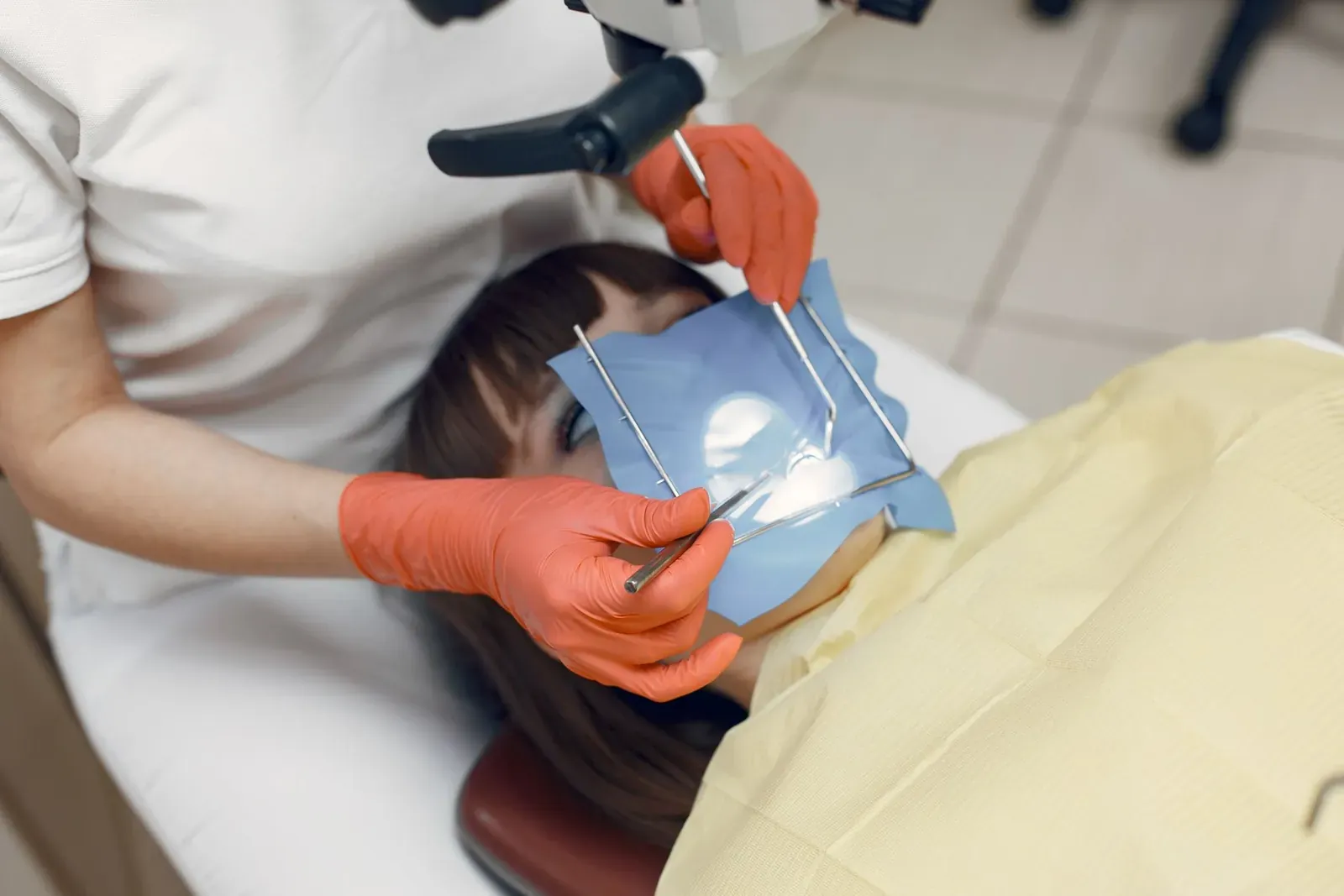
A cavity that has reached the dentine, the softer layer under your enamel, needs a filling. A cavity that has reached the nerve needs a root canal: the infected nerve tissue, called the pulp, is cleaned out, the space is disinfected and sealed, and the tooth is usually capped with a crown afterwards. Both exist for the same reason: your own tooth root holds the jawbone in place and bites better than anything that replaces it. Root canal treatment has a reputation for pain that is now largely undeserved. The pain you feel beforehand is the infected nerve, and that is exactly what the treatment removes, under local anaesthetic, so the procedure itself should not hurt more than getting a filling. What it does take is time, often two visits, because the canal has to be genuinely clean before it is sealed. A root-treated tooth becomes brittle afterwards, which is why a crown usually follows on back teeth.
Medically reviewed by Dr. Binaya Bhandari, Owner and Dental Surgeon, NMC 20701. Last updated .
When do you need this treatment?
- A tooth aches on its own, especially at night
- Sharp pain with cold or sweet things that lingers afterwards
- A visible hole, dark spot or broken edge on a tooth
- Swelling or a small bump on the gum next to a tooth
What happens during your visit?
- 1X-ray to see how deep the decay has gone
- 2Local anaesthetic, then removal of the decayed tissue
- 3A composite filling, or root canal cleaning and sealing if the nerve is involved
- 4A crown afterwards where the remaining tooth structure needs protecting
What happens if you leave it untreated?
An infected nerve does not heal on its own. The infection travels down the root and into the bone, forming an abscess, a painful pocket of pus, and the pain usually comes back worse than before. At that stage the tooth often cannot be saved, and facial swelling from a dental abscess can become a medical emergency.
What is recovery like?
Your tooth is commonly tender to bite on for a few days to a week while the tissue holding it in the bone settles down, and ordinary painkillers usually manage it. Chew on the other side until the permanent filling or crown is fitted. Tell us if you get swelling, or if the pain gets worse after the first few days, rather than waiting it out.
General guidance only. Your own recovery depends on your case, and the dentist treating you will tell you what to expect.
Questions you might have
Dental Filling & Root Canal Treatment (RCT)
Does a root canal hurt?
The procedure is done under local anaesthetic, so it should feel comparable to having a filling. Most of the pain people associate with root canals is the infected nerve beforehand, which is what the treatment removes. Tenderness for a few days afterwards is normal.
How many visits does a root canal take?
Often two. Sometimes one for a straightforward front tooth, and three for a molar with several curved canals. The canal has to be fully clean before it is sealed, so the number of visits depends on how the infection responds rather than on a fixed schedule.
Do I really need a crown after a root canal?
For back teeth, usually yes. A root-treated tooth has lost its blood supply and become brittle, and molars take the heaviest chewing force. A crown protects it from splitting, which is the most common way a successfully root-treated tooth is eventually lost.
How much does a root canal cost?
It depends on the tooth. A front tooth has one canal and costs less than a molar with three or four. Whether you also need a crown afterwards changes the total again. Ask for the price before you agree to start, so you know the full cost and not just the first visit.
Who does this
The 2 dentists who handle this treatment
All Nepal Medical Council registered. Call ahead to confirm which of them is in on the day you want to come.

Dr. Binaya Bhandari
Owner and Dental Surgeon
General Dentist
BDS
NMC 20701

Dr. Nilishma Amatya
General Dentist
BDS
NMC 39418
Thinking about Dental Filling & Root Canal Treatment (RCT)?
Send us a message describing the problem. We will tell you whether this is the right treatment for it.
Check-up and consultation are free