
Treatment
Tooth extraction and minor oral surgery
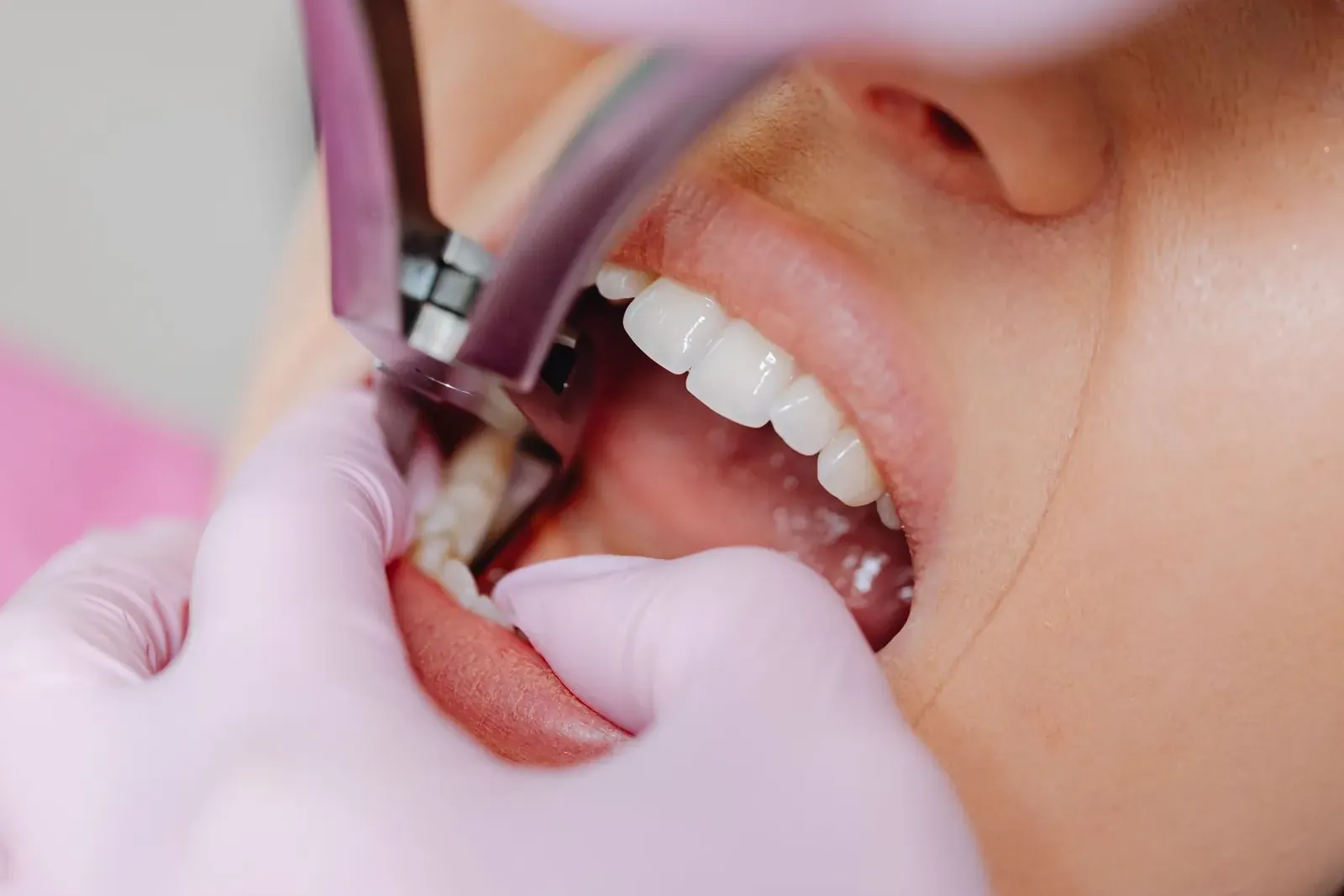
Extraction is the last option, not the first. A natural tooth root maintains the bone around it, and once a tooth is out that bone begins to shrink, which is why replacing a missing tooth gets harder the longer it is left. Some teeth genuinely cannot be saved: split roots, decay running below the gum line, or advanced gum disease that has already destroyed the supporting bone. Wisdom teeth are a separate case. They frequently come through at an angle or stay buried, and a partly erupted one traps food and bacteria under a flap of gum that cannot be cleaned, causing repeated infection and pressure on the healthy molar in front. Two oral and maxillofacial surgeons are on the team here for the cases that need surgical removal rather than a simple extraction.
Medically reviewed by Dr. Binaya Bhandari, Owner and Dental Surgeon, NMC 20701. Last updated .
When do you need this treatment?
- Pain or swelling at the back of the jaw where a wisdom tooth is coming through
- A tooth broken below the gum line
- Repeated infection around one tooth
- An orthodontist has advised extraction to make room for alignment
What happens during your visit?
- 1X-ray to see the roots and the position of the nerve
- 2Local anaesthetic, then simple or surgical removal depending on the tooth
- 3Stitches where the socket needs closing
- 4Written aftercare instructions, and a follow-up if stitches need removing
What happens if you leave it untreated?
An impacted wisdom tooth, one that is stuck and cannot come through properly, left in place can keep causing infection, decay in the healthy molar in front of it, and in some cases a cyst in the jaw. A badly broken or abscessed tooth left in the mouth stays a source of infection and pain that antibiotics only postpone.
What is recovery like?
Expect swelling and discomfort peaking around 48 to 72 hours, then settling over the following week. Surgical wisdom tooth removal takes longer than a simple extraction. Do not rinse, smoke or use a straw for the first 24 hours: disturbing the clot causes a dry socket, which is genuinely painful.
General guidance only. Your own recovery depends on your case, and the dentist treating you will tell you what to expect.
Questions you might have
Tooth Extraction & Minor Surgery
Do all wisdom teeth need to be removed?
No. A wisdom tooth that has come through straight, bites properly against the opposing tooth and can be cleaned should be left alone. Removal is for teeth causing infection, decay, crowding or pressure, or ones an X-ray shows are impacted in a way that will cause those problems.
What is a dry socket and how do I avoid one?
It is the blood clot being lost from the socket before the wound heals, exposing bone, and it causes severe pain a few days after extraction. Avoid it by not smoking, rinsing, spitting forcefully or using a straw for the first 24 to 48 hours.
How soon can I replace an extracted tooth?
The socket usually needs six to twelve weeks to heal before a bridge or implant, although in selected cases an implant can be placed at the time of extraction. The longer a gap is left, the more bone is lost and the more complex replacement becomes.
Who does this
The 2 dentists who handle this treatment
All Nepal Medical Council registered. Call ahead to confirm which of them is in on the day you want to come.

Dr. Siddhant Thapa
Oral & Maxillofacial Surgeon
BDS, MDS
NMC 28374

Dr. Bijay Karki
Oral & Maxillofacial Surgeon
BDS, MDS
NMC 20957
Thinking about Tooth Extraction & Minor Surgery?
Send us a message describing the problem. We will tell you whether this is the right treatment for it.
Check-up and consultation are free